

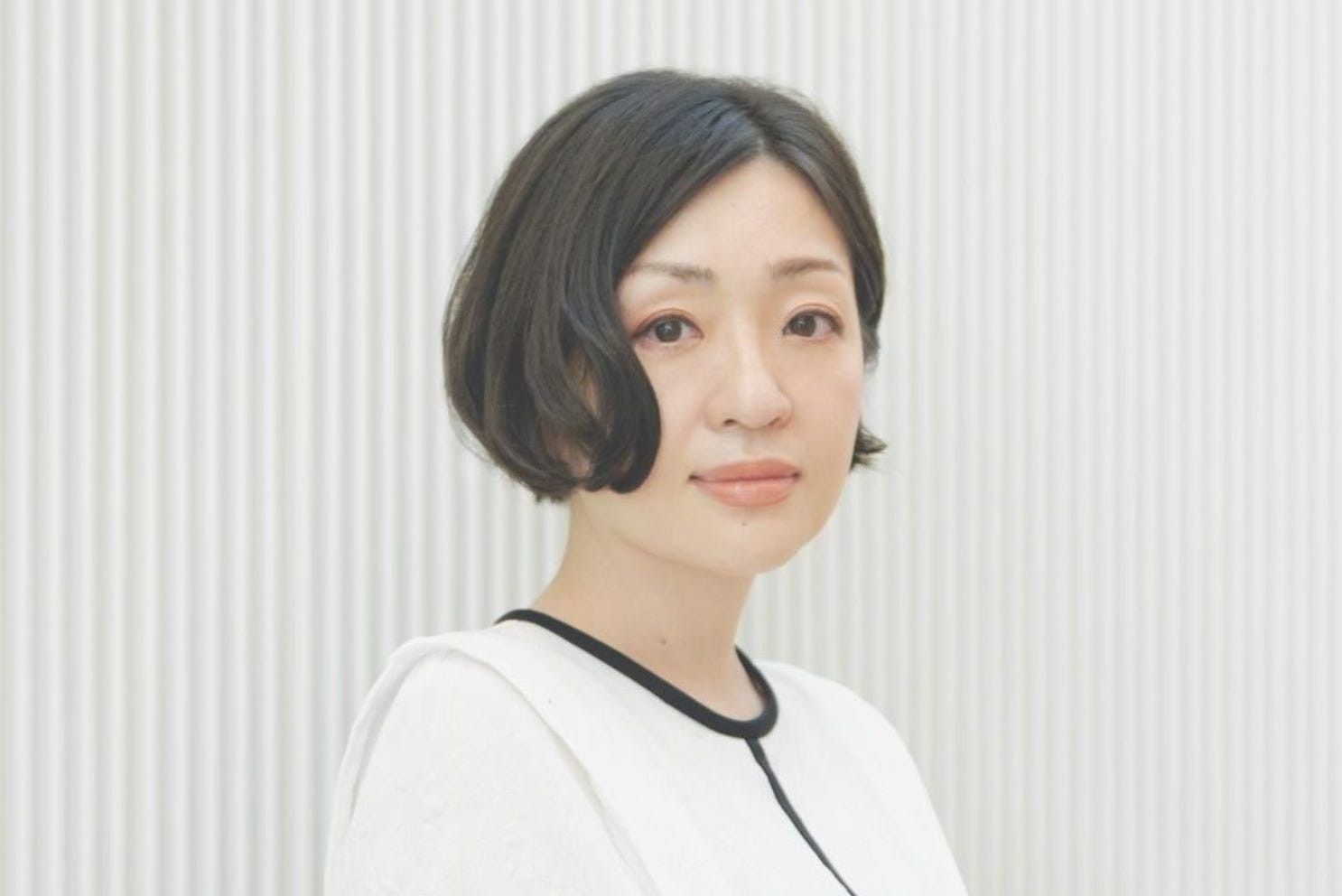
Sayaka Murata never quite learned to be human. She tried—painfully, diligently. As a child in Chiba, a suburban prefecture east of Tokyo, she studied her peers the way an alien might, watching for signs, learning their codes, trying to mask the strange internal world that set her apart. It didn’t work. At school, she was bullied and isolated. At home, she retreated into writing, convinced she was meant to live by a different logic entirely.
The conviction never left her. Over the past two decades, Murata has become one of Japan’s most provocative literary voices, a writer whose odd, deadpan style and speculative sensibilities have drawn comparisons to everyone from Michel Foucault to Tolstoy. Her breakout novel, Convenience Store Woman, was her tenth book—and the first to be translated into English. It follows Keiko, a woman in her mid-thirties who finds solace and structure in a dead-end job at a Smile Mart. She doesn’t want a relationship, doesn’t want a better job, doesn’t want to change. She just wants to be left alone to work the register.
The novel, a bestseller in Japan and abroad, tapped into something raw and deeply under-discussed—particularly among women. Its deadpan strangeness hit a nerve. Keiko’s refusal to follow social scripts—no sex, no career ambitions, no romantic aspirations—wasn’t framed as tragedy. It was framed as freedom.
Murata didn’t set out to write a manifesto. In fact, she’s wary of politics entirely. “I do not want any human thoughts to soil my aquarium,” she once told the New Yorker, referencing the sterile glass cube she imagines as the place where her stories unfold—clean, sanitized, separate from the messy emotional entanglements of real life.
But whether she intends to or not, her fiction speaks loudly about the quiet violence of normalcy. In Earthlings, a woman believes she’s an alien trapped on Earth. In Life Ceremony, funerals become occasions to eat the dead. In Vanishing World, sex has become taboo, and children are raised collectively by the state in a large-scale system of artificial insemination and enforced joy.
Her stories are often grotesque, sometimes funny, occasionally horrifying—but they’re never random. The surrealism is always structured, the dystopias always just a few logical steps removed from our own. “Normal,” one of her characters observes, “is a type of madness, isn’t it?”
